Loading...
Loading...
Loading...
Loading...
Loading...
Loading...

Loading editorial...
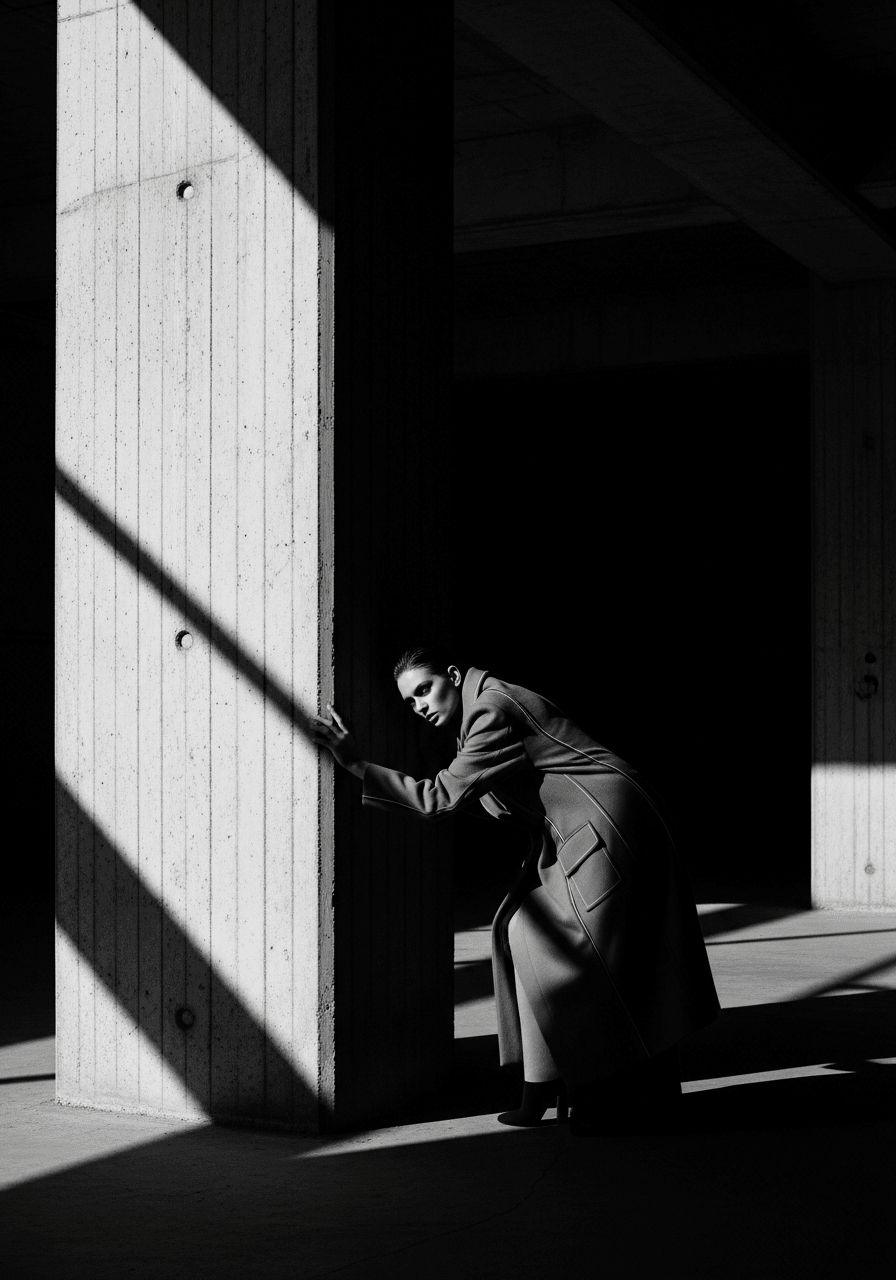
Barbican. Silk. Concrete dust.
The security guard asked if we had a permit. We didn't.
Photography: Tyler LeBlanc / Styling: Sofie Lind, Harper Cho / Hair: Rafael Costa
We arrived at 5:15 AM and talked our way past a maintenance crew who were hosing down the walkways. The wet concrete became part of the shoot — Rosalie's silk hem picked up water immediately and we decided to run with it. Tyler works fast and quiet. By the time security showed up at 6:40, we had thirty usable frames and one puddle shot that stopped the whole team in their tracks. We were packed and gone before anyone asked for paperwork.
The Barbican carries a conviction that's increasingly rare. The belief that raw concrete can be beautiful without apology. Shooting a silk gown against that surface isn't contrast for contrast's sake. It's a conversation between two materials that refuse to compromise. The brutalist ethic applied to fashion: nothing hidden, nothing decorative, everything structural.
Silk gown dragging through concrete dust and standing water. By the fifth take, the fabric had picked up a patina that no dye house could replicate. Grey streaks across ivory, the bottom six inches heavy with damp. The weight of the Barbican in the fabric.
Pre-dawn London, the concrete still holding last night's cold. Natural ambient light doing most of the work. Flat, grey, honest. Where the walkways channelled the first morning rays, hard geometric shadows cut across the silk. No fill.
The Barbican at dawn. No permit, no permission, no backup plan. 'Start shooting,' Tyler said. So we did. The silk gown collected concrete dust from the first take. By the fifth, it looked like it had survived something. 'Don't clean it,' Rosalie said. We didn't. The hem dragged through a puddle on the last setup. That's the image everyone remembers.